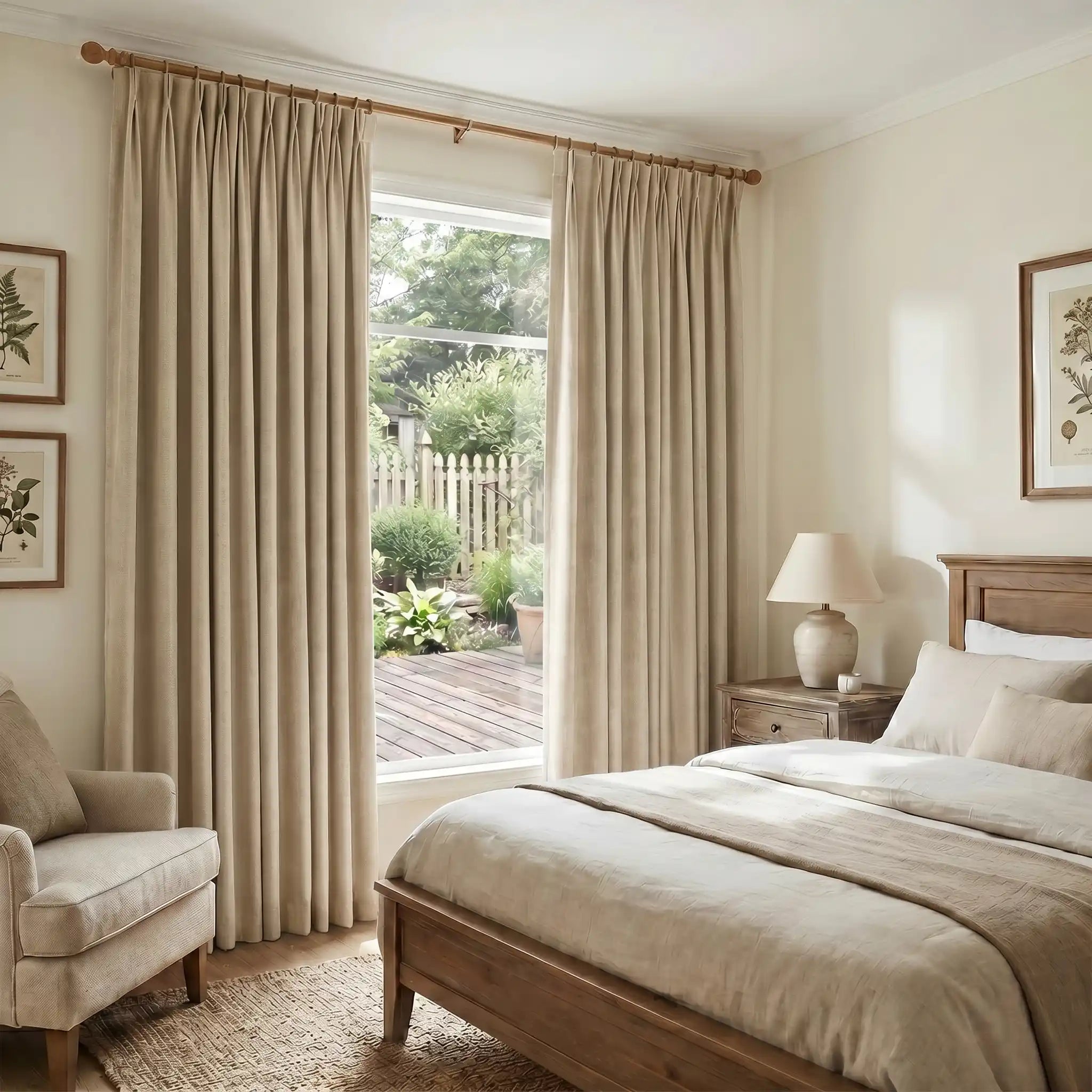
Fabric & Light Control

Beat the Heat: Your Ultimate Guide to Summer Bedroom Curtains
Summer sunshine is glorious, but when it invades your bedroom sanctuary turning it into a furnace by 7 AM, it’s time for strategic curtain choices! The right curtains aren't just décor; they're your frontline defense against heat, glare, and restless nights. Let’s dive into the key factors: color and material. 1. Color: Your Secret Weapon Against the Sun Think of your curtains as solar reflectors (or absorbers). Color choice dramatically impacts room temperature: Light & Reflective Reign Supreme: Whites & Ivories: The ultimate heat reflectors. They bounce sunlight back out, keeping the room significantly cooler. They also create a bright, airy, clean feel – perfect for a summer vibe. Think crisp cotton or breezy linen in white. Pastels (Soft Blues, Lavenders, Mint Greens, Pale Yellows): Gentle on the eyes and excellent at reflecting heat. They add a touch of soothing color without the thermal penalty of darker shades. Perfect for creating a calm, cool retreat. Light Neutrals (Beige, Taupe, Stone): Offer warmth without the heat absorption. They blend easily with existing décor and provide good reflective properties. Avoid (or Strategize with) Dark Colors: Deep Blues, Charcoals, Blacks, Rich Reds: These absorb and trap heat, radiating it into your room. While great for winter insulation or creating a dramatic, cozy feel, they can make a summer bedroom stifling. The Exception: If you need a dark room for sleeping (night shift workers, light-sensitive individuals), pair very dark curtains with a light-colored lining. The dark outer face blocks light, while the light lining facing the window reflects heat away from the room. Look for curtains specifically designed with thermal or reflective linings. 2. Material: The Breath of Fresh Air The fabric itself dictates breathability, light filtration, and overall feel: Champions of Cool & Breezy: Linen: The undisputed summer king. Naturally breathable, moisture-wicking, and textured, allowing air to circulate beautifully. It diffuses light softly, creating a relaxed, elegant look. Wrinkles are part of its charm! (Think rustic villa vibes). Cotton: A classic, versatile choice. Opt for lighter weaves like cotton voile or cotton gauze for maximum airiness and light diffusion. Easy to care for and comes in countless colors/patterns. Perfect for a casual, fresh feel. Sheers (Polyester, Cotton, Linen blends): Essential for maintaining light and view while offering some privacy and diffusing harsh glare. Layer them under heavier curtains or use alone for an ethereal, open feel. Excellent for daytime when you want sunlight but not the intense heat or UV. Bamboo/Roman Shades (as an alternative): While not curtains per se, natural woven bamboo or light-colored Roman shades offer fantastic light control, texture, and breathability. They can be paired with side panels for a layered look. Materials to Tread Lightly With: Heavy Velvet/Brocade: Gorgeous for drama, but they trap heat and block all air movement. Save these for winter or formal rooms rarely used in summer heat. Thick Synthetic Blends (without specific cooling tech): Some cheap synthetics can feel plasticky and trap heat. They may also fade quickly in strong sun. Unlined Heavy Curtains: Even in a lighter color, a heavy, unbreathable weave will still act as an insulator, holding heat in. The Blackout Question: Pros: Essential for shift workers, babies, or anyone needing pitch darkness for sleep. Blocks all light and provides significant insulation (good for AC efficiency). Cons: Often made from thicker, less breathable materials (polyester blends). Can feel heavy and trap heat if they don't have a reflective coating on the window-facing side. Summer Solution: Look for light-colored blackout curtains (white, ivory, light grey) with a reflective thermal backing. This ensures they block light and reflect solar heat away. Layer them over light-filtering sheers for flexibility – sheer for daytime ambiance, blackout for sleep. Beyond Color & Material: Pro Tips for Summer Success Light Filtering vs. Room Darkening vs. Blackout: Know your sleep needs! Sheers filter light beautifully. Room-darkening fabrics block most light. Blackout blocks all. Length & Fullness: Floor-length curtains help insulate better. Fuller panels (wider than the window) look luxurious and provide better coverage when closed. Layering: The ultimate summer strategy! Combine lightweight sheers (for daytime light and privacy) with light-colored, breathable blackout panels (for sleep). This offers maximum flexibility and climate control. Lining: A light-colored, reflective lining (like white thermal backing) is crucial for any curtain aiming to combat heat, especially if the outer fabric is medium-toned. Hardware: Use tiebacks or holdbacks to neatly secure curtains during the day, maximizing airflow through open windows. UV Protection: Look for fabrics offering UV protection to prevent your furniture and flooring from fading. The Perfect Summer Curtain Recipe: For most bedrooms, aim for light-colored (white, ivory, pastel) curtains in a natural, breathable material like linen or lightweight cotton. If you need darkness, choose light-colored blackout curtains with a reflective thermal lining. Don't forget the power of layering with breezy sheers! By choosing wisely, your curtains become more than window dressing; they transform your bedroom into a cool, comfortable, and light-controlled haven, ensuring you wake up refreshed, not frazzled, all summer long. Sweet (and cool) dreams!
Learn more
Curtains with Tiebacks: Sculpting Light & Style with the Perfect Tieback
There’s a moment in every well-designed room where the curtains are pulled back just so — gathered into an elegant swag that frames the window like a painting. That’s the tieback at work. Far more than a functional accessory, the right tieback transforms how your curtains look, how much light enters the room, and how the entire space feels. Whether you’re working with the best blackout curtains, flowing sheers, or luxurious velvet drapes, understanding how to use tiebacks effectively is one of the simplest ways to elevate your window treatment game. Why Tiebacks Matter More Than You Think Most people think of tiebacks as purely functional — a way to hold curtains open during the day. But their impact goes much deeper. The placement of a tieback determines the silhouette of the curtain: high tiebacks create a dramatic, hourglass shape with a generous puddle at the bottom; low tiebacks give a more casual, relaxed look with fabric flowing freely from the top. For the best curtains for living room spaces, tiebacks are often the finishing touch that takes a window treatment from “good” to “great.” They add visual interest, create movement, and let in significantly more natural light than curtains left hanging straight. How to Style Blackout Curtains with Tiebacks Blackout curtains are often associated with a heavy, utilitarian look — but tiebacks change everything. How to style blackout curtains with tiebacks: pull the panels back to about one-third of the window width on each side, securing them at roughly two-thirds of the curtain height. This creates a graceful curve that softens the weight of the fabric while still allowing the curtains to be drawn fully closed at night. For best blackout curtains for bedroom windows, tiebacks are especially useful: they let in morning light when you want it while keeping the option of total darkness for sleep. It’s the most practical and stylish solution for bedrooms that need both light and darkness at different times of day. How to Style Sheer Curtains with Tiebacks Sheer curtains and tiebacks are a classic pairing. How to style sheer curtains with tiebacks: because sheers are lightweight and translucent, tiebacks create a soft, romantic silhouette that’s particularly beautiful in living rooms, dining rooms, and bedrooms. Try tying them back asymmetrically — one panel pulled back, one left hanging — for a relaxed, artistic look. The best sheer curtains for bedroom windows look especially beautiful with fabric tiebacks in a matching or complementary color, creating a cohesive, intentional aesthetic. How to Layer Sheer and Blackout Curtains with Tiebacks The most versatile window treatment setup combines both: sheer panels on an inner rod, blackout curtains on an outer rod, with tiebacks for the blackout layer. How to layer sheer and blackout curtains with tiebacks: during the day, tie back the blackout panels to reveal the sheers behind. At night, release the tiebacks and draw the blackout curtains closed for complete privacy and darkness. This layered approach works beautifully as best curtains for bedroom windows, giving you complete control over light and privacy throughout the day without sacrificing style. Tieback Placement: Getting the Height Right Tieback height dramatically affects the look of your curtains. Here’s a quick guide: High tiebacks (two-thirds up the curtain): Creates a dramatic, formal silhouette with a generous sweep of fabric at the bottom. Best for tall windows and formal living rooms. Mid-height tiebacks (halfway up): The most balanced and versatile option. Works in almost any room and with any curtain style. Low tiebacks (one-third up): Casual and relaxed, with most of the fabric hanging freely. Works well with lightweight sheers and linen curtains. Tieback Materials & Styles The tieback itself is a design element. Choose one that complements your curtain fabric and room style: Fabric tiebacks: Soft and elegant, often made from the same fabric as the curtain. The most classic choice for best linen curtains and velvet drapes. Rope or tassel tiebacks: Add a decorative, artisanal quality. Beautiful with linen and cotton curtains. Metal holdbacks: Sleek and contemporary, mounted directly to the wall. Work well with grommet curtains and modern interiors. Magnetic tiebacks: Practical and invisible — the magnets hold the curtain in place without any visible hardware. Tiebacks for Different Window Types How to Style Curtains for Large Windows For how to style curtains for large windows, use tiebacks to create a grand, symmetrical frame. Pull each panel back generously — at least one-third of the window width — and secure at mid-height or higher. This maximizes the view and light while maintaining the visual weight that large windows need. How to Style Curtains for French Doors How to style curtains for French doors with tiebacks: mount tiebacks directly on the door or on the wall beside the door frame. Keep the tieback low enough that the curtain clears the door handle when pulled back. Lightweight linen or sheer panels work best for French doors — heavy fabrics can interfere with door operation. How to Style Curtains for Sliding Glass Doors For how to style curtains for sliding glass doors, tiebacks are especially practical: they keep the curtain panels stacked neatly to one side when the door is in use. Use a single tieback per panel, positioned at mid-height, to create a clean stack that doesn’t interfere with the door’s operation. FAQ: Curtains with Tiebacks How high should tiebacks be placed? The most flattering placement for most curtains is at two-thirds of the curtain height — so if your curtains are 96 inches long, place the tieback at about 64 inches from the floor. Adjust up or down based on the silhouette you want: higher for drama, lower for a relaxed look. Are curtains with tiebacks worth it for bedrooms? Absolutely. Tiebacks let you maximize morning light while keeping the option of full darkness for sleep. The best blackout curtains for bedroom windows with tiebacks give you complete flexibility — open and bright during the day, dark and private at night. How to choose curtains with tiebacks for a living room? For how to choose living room curtains with tiebacks, consider the weight of the fabric. Heavier fabrics like velvet and linen create more dramatic tiebacks; lighter sheers create a softer, more romantic effect. Match the tieback material to the curtain fabric for a cohesive look. Can I add tiebacks to curtains that didn’t come with them? Yes — tiebacks are sold separately and can be added to any curtain. Fabric tiebacks, rope tiebacks, and metal holdbacks are all available as standalone accessories. Choose a style that complements your curtain fabric and room aesthetic.
Learn more