
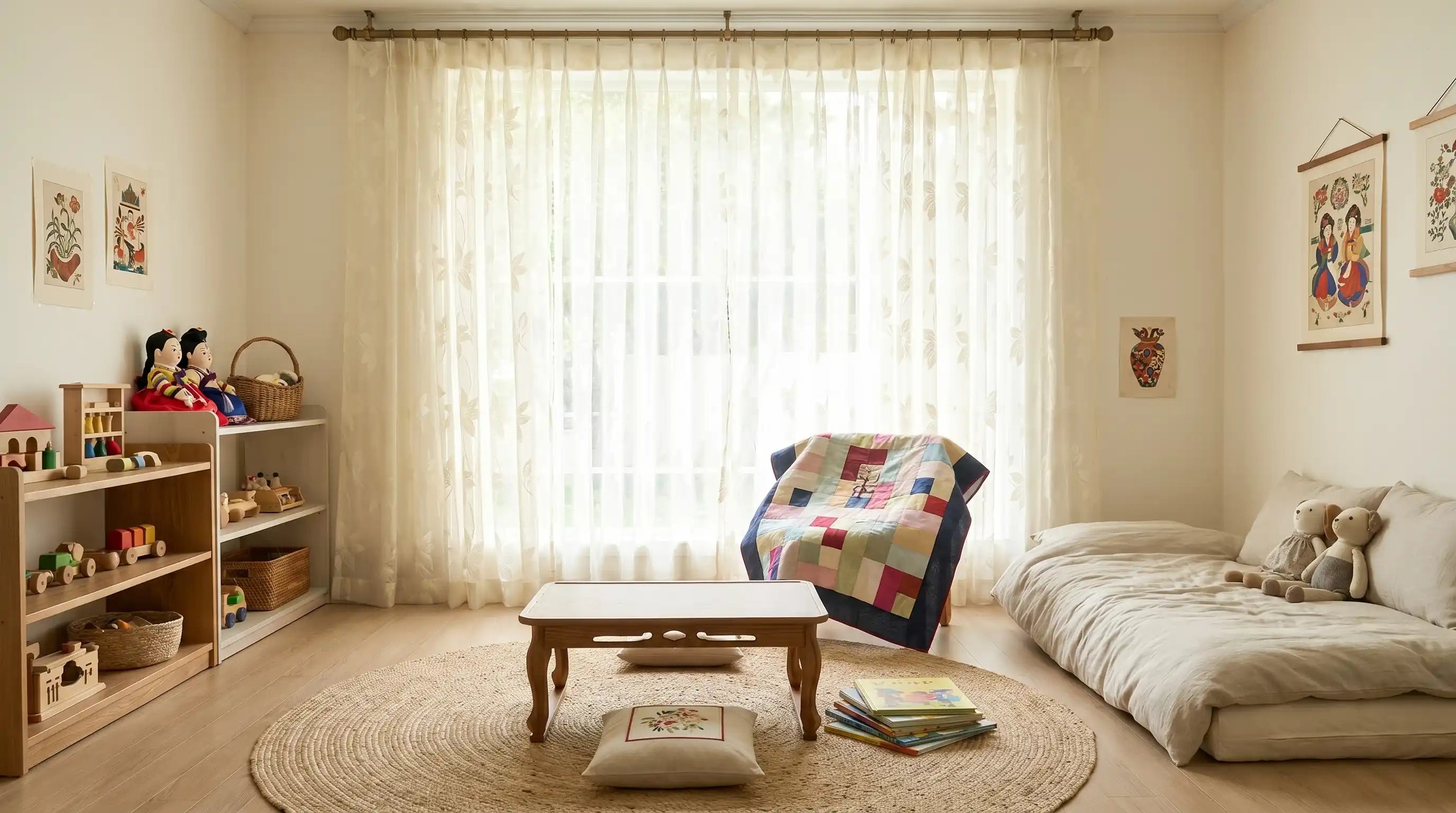
A nursery window treatment has a harder job than almost any other curtain in the house. It needs to block enough light for naps at 2pm in July. It needs to be made from materials that are safe, soft, and easy to wash. And it needs to do all of that while still making the room feel warm and considered rather than purely functional.
The good news is that these requirements aren't in conflict — but they do need to be addressed in the right order. Here's how to think through nursery curtain ideas without getting distracted by things that matter less.
Softness and Child-Safe Design Come First
Before anything else, the nursery curtain needs to be safe. That means no long, loose cords that can pose a strangulation risk — cordless or motorized options are strongly preferred for any room where a young child sleeps or plays. It also means choosing fabrics that are free from harsh chemical treatments and finishes, and that won't shed fibers or irritate sensitive skin.
Beyond safety, softness matters in a nursery in a way it doesn't in other rooms. The room should feel gentle and calm — not clinical or stark. Cotton curtains are a natural fit here: they're soft, breathable, widely available in calm colors and simple patterns, and easy to launder when the inevitable spills and messes happen. Linen curtains are another strong option for nurseries where you want a slightly more textured, natural feel — linen is naturally hypoallergenic and gets softer with every wash.

Darkness for Naps and Early Bedtimes
This is the functional requirement that most parents underestimate until they're dealing with a baby who won't nap because the room is too bright. Young children — and many older ones — sleep significantly better in genuine darkness. That means a treatment that blocks light properly, not just reduces it.
A blackout lining is the most practical solution. It can be added to almost any curtain fabric, which means you don't have to choose between the look you want and the performance you need. Look for curtains with a built-in blackout lining rather than a separate liner panel — it's easier to hang, looks cleaner, and performs better at the edges where light tends to leak in.
For rooms with particularly strong light exposure, it's also worth thinking about how the curtain is mounted. A ceiling-mounted track or a rod that extends well beyond the window frame on each side will minimize the light gaps that even good blackout fabric can't fully address. Custom curtains are worth considering here — a panel sized precisely to your window, with a proper blackout lining and the right mounting, will outperform any ready-made option in terms of actual darkness.

Washable, Calming Materials
Nurseries are messy. Whatever fabric you choose needs to be machine washable — not dry-clean only, not hand-wash only. This is non-negotiable in a room that will see milk, food, and general baby chaos on a regular basis.
Cotton is the easiest to care for and holds up well to repeated washing without losing its shape or color. Linen wrinkles more but softens beautifully over time and is naturally resistant to bacteria and odors. Both are good choices. What to avoid: heavily structured fabrics, delicate weaves, or anything with embellishments that can't go in a standard wash cycle.
For color, the nursery benefits from the same principle as the bedroom: calm and muted over bright and saturated. Soft whites, warm creams, dusty pinks, sage greens, and pale blues all work well and tend to age gracefully as the room evolves from nursery to toddler room to child's bedroom.
A Few Practical Questions Worth Asking
Before finalizing your choice, it helps to think about the room's specific conditions rather than just the general category. Is the window opened regularly for ventilation? If so, a lightweight fabric that moves easily is more practical than something heavy. Is the crib positioned near the window? If so, cord-free operation is especially important. Does the room need to function as a nap space during the day as well as overnight? If so, blackout performance matters more than it would in a room used only at night.
If you want something that ships quickly and doesn't require a long lead time, ready-to-ship curtains are worth browsing — there's often more variety than people expect, and for a nursery where needs may change as the child grows, a faster turnaround can be genuinely useful.

Final Thoughts
The best nursery curtain ideas are the ones that solve the real problems first: safety, darkness, and washability. When those are handled, the aesthetic decisions become much simpler — because you're choosing between options that all actually work, rather than compromising on what matters to get the look you want.