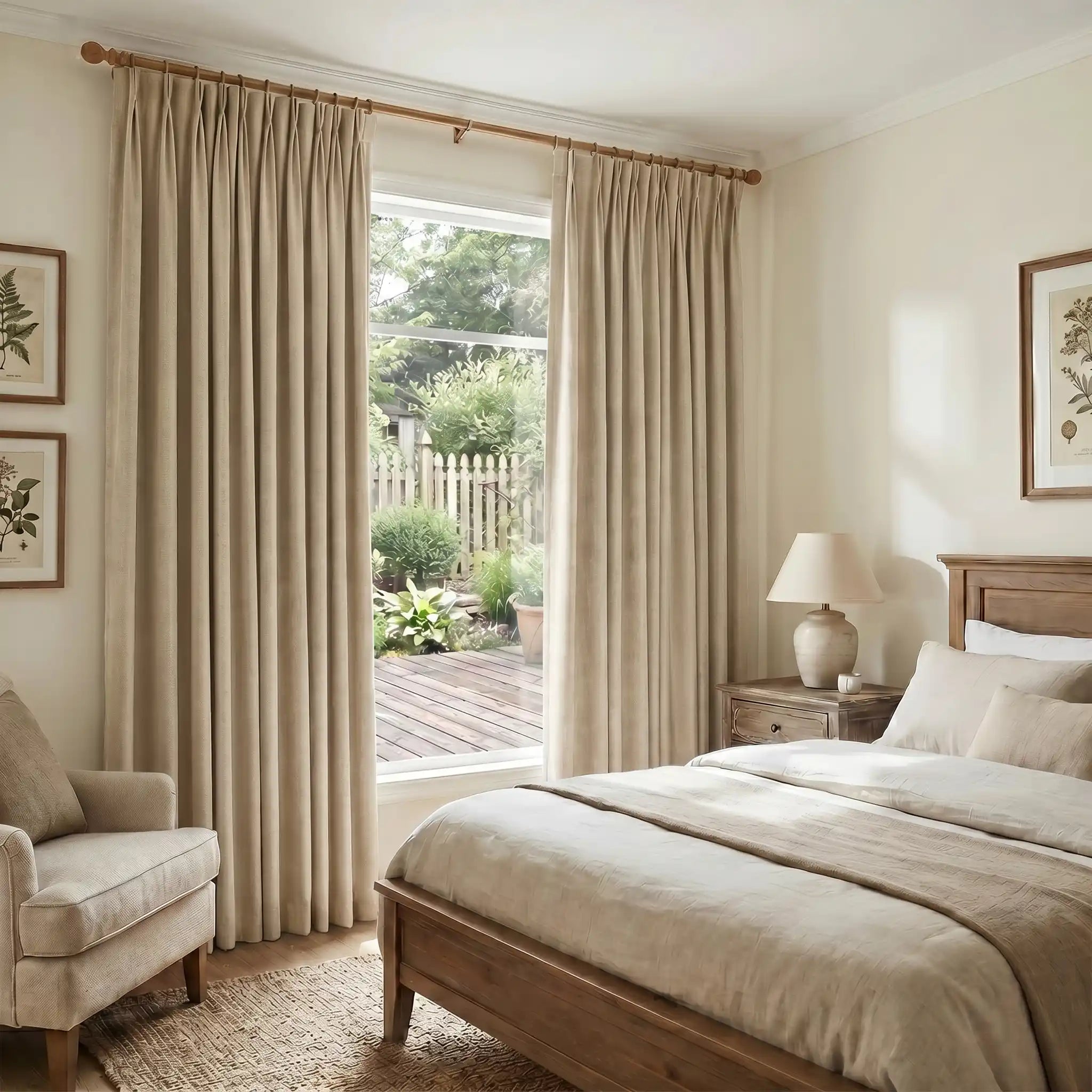
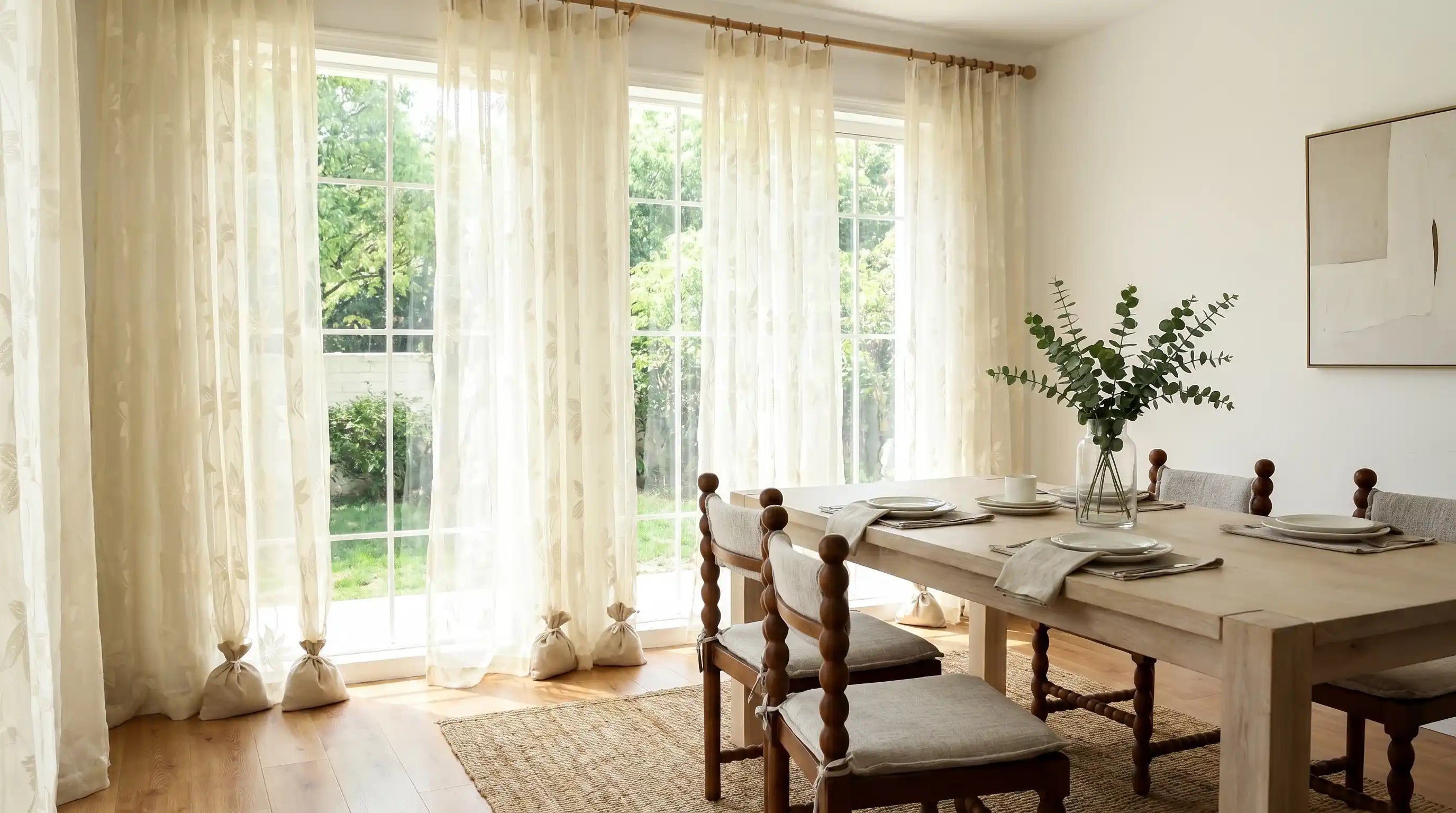
The kitchen window gets used differently from any other window in the house. It's looked at constantly — while washing up, making coffee, cooking — and the curtain has to work in full daylight, often in a room that gets steamy, greasy, and busy. That's a different brief than a living room or bedroom, and it calls for a different way of thinking about kitchen curtain ideas.
The short version: function has to lead, but that doesn't mean settling for something dull.
Keep the Room Bright and Workable
Kitchens need light. More than almost any other room, a kitchen that feels dark or closed-in becomes harder to work in and less pleasant to spend time in. The curtain's first job is to not get in the way of that light — and ideally, to manage it rather than block it.
For most kitchen windows, this means avoiding heavy, floor-length panels that eat into the window's light output. Shorter treatments — cafe curtains, half-panels, or a simple valance — tend to work better because they leave the upper portion of the window clear. Sheer curtains are another strong option: they diffuse direct sun without darkening the room, which is especially useful if your kitchen faces south or west and gets strong afternoon light.

Easy-Care Fabrics for a Room That Gets Messy
This is the practical reality of kitchen curtains that styled photos tend to gloss over: the kitchen is a messy room. Steam, cooking smells, grease particles, and general daily use mean the curtain will need washing more often than treatments in other rooms. That makes fabric choice genuinely important.
The best kitchen curtain fabrics are:
- Cotton — machine washable, holds color well, and comes in a huge range of weights and weaves
- Linen — naturally resistant to odors, gets softer with washing, and has a relaxed quality that suits most kitchen aesthetics
- Polyester blends — the most practical option if easy maintenance is the top priority; they resist staining and dry quickly
Cotton curtains are a reliable default for kitchens — they're easy to care for, look clean and fresh when laundered, and work in both casual and more considered kitchen styles. Linen curtains are worth considering if you want something with a bit more texture and character, and don't mind a slightly more relaxed finish.

Styles That Work for Smaller Kitchen Windows
Kitchen windows are often smaller than windows in other rooms, and the treatment needs to be proportionate. A full-length panel on a small kitchen window can look heavy and out of scale — and it often blocks counter space or interferes with the sink.
Some styles that tend to work well:
- Cafe curtains — cover the lower half of the window, give privacy without blocking light, and have a classic kitchen quality that works across a wide range of styles
- Valances — a top treatment only, purely decorative, good for windows where privacy isn't a concern
- Tier curtains — two separate panels, top and bottom, that can be adjusted independently
- Short panels — sill-length rather than floor-length, which keeps the treatment in proportion with a smaller window
If your kitchen has larger or non-standard windows, custom curtains give you the flexibility to get the proportions exactly right rather than adapting a ready-made panel that's close but not quite correct.

Getting the Proportions Right
Even in a kitchen, the basics of good curtain proportion apply. The rod should sit above the window frame — not on it — and extend beyond the frame on each side so the treatment doesn't crowd the glass when open. For shorter treatments like cafe curtains, the mounting height matters too: too high and the coverage gap is too large; too low and the room loses light unnecessarily.
It's also worth thinking about hardware. In a kitchen, simple and easy-to-clean tends to win over decorative. A basic rod in a finish that works with your fixtures — brushed nickel, matte black, or warm brass — is usually all you need.
Final Thoughts
The best kitchen curtain ideas are the ones that make the room easier and more pleasant to use, not just better-looking in photos. Start with light, ease of care, and proportion — and the style decisions will follow naturally from there.