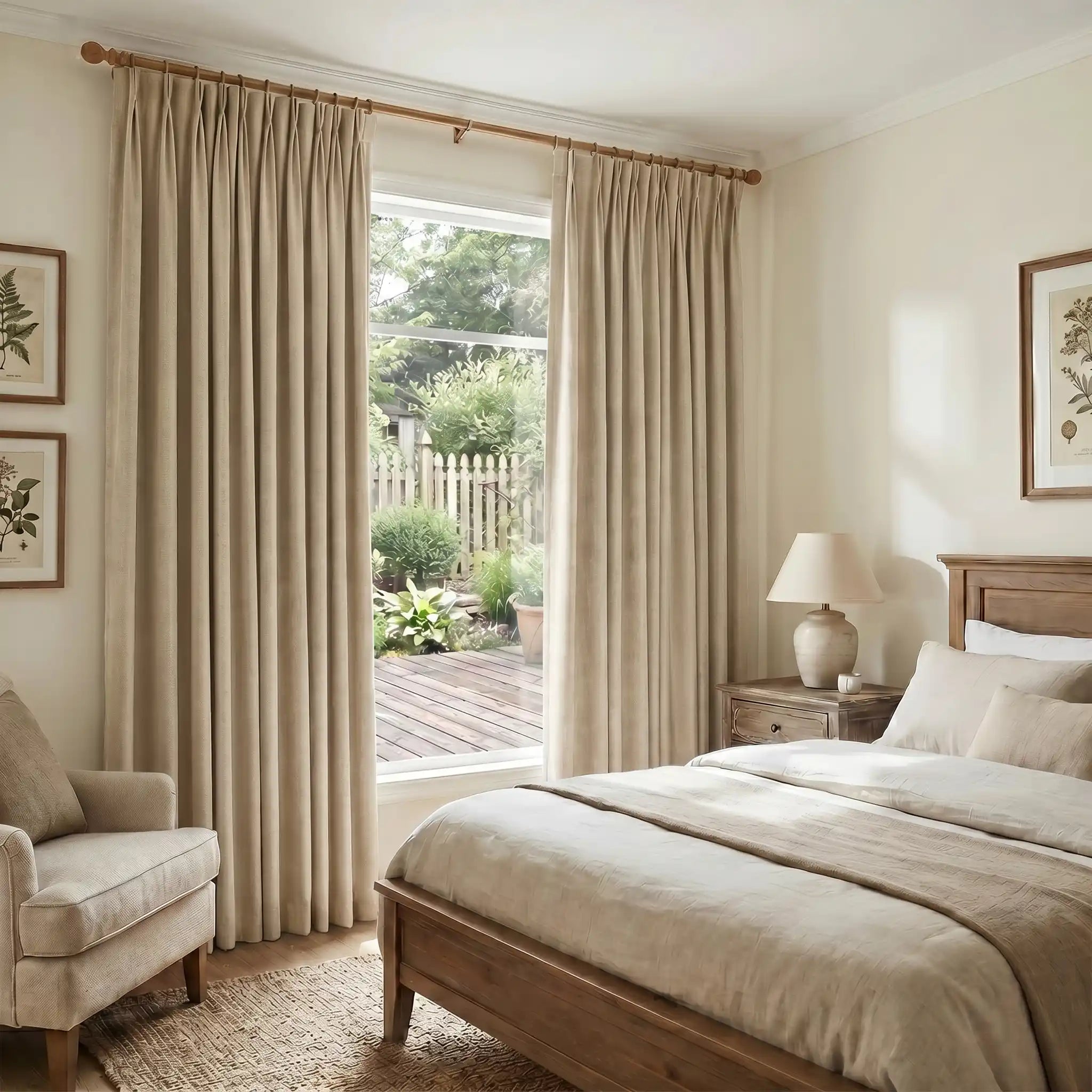

Curtain length is one of those decisions that looks minor until you get it wrong. A panel that's two inches too short makes the whole room feel slightly off — not dramatically wrong, just never quite settled. And because curtains frame the window from floor to ceiling, that small miscalculation is visible from everywhere in the room. That's why getting the best curtain length right is worth more attention than most people give it.
The good news is that there are really only a few options, and each one communicates something specific. Once you understand what each length does to a room, the choice usually becomes obvious.
What different lengths communicate visually
Length isn't just a practical measurement — it's a design signal. Floor-length curtains say formal, considered, and finished. Sill-length curtains say practical and unfussy. Anything in between — hovering awkwardly between the sill and the floor — tends to look like a mistake rather than a choice.
The most reliable rule is to commit to one end or the other. Either go to the floor or stop at the sill. The middle ground rarely works, and it's almost always the result of buying a standard length without measuring first.

Where floor length makes sense
Floor-length curtains work in almost every room — bedroom, living room, dining room — and they almost always make the space feel more considered. The reason is simple: a panel that runs from near the ceiling to the floor draws the eye upward and downward simultaneously, which makes the ceiling feel higher and the room feel more complete.
For bedrooms especially, floor-length blackout panels are hard to beat. Our Custom Luxury Silk-Fiber Blackout Curtains are designed to hang cleanly to the floor with just a slight break — enough to look intentional without pooling excessively. If you want a more dramatic look, letting the fabric pool an inch or two adds a sense of luxury that works well in formal spaces.

When shorter lengths are genuinely useful
Sill-length curtains get a bad reputation, but they're genuinely the right choice in certain situations. Kitchens and bathrooms benefit from shorter panels because floor-length fabric near a sink or stove is impractical. Rooms with radiators under the windows need panels that stop above the heat source. And spaces with furniture placed directly under the window — a sofa, a window seat, a desk — often look better with a treatment that doesn't compete with what's below it.
Our Custom Linen Texture Solid Sheer Curtains work well at sill length in these situations — the texture keeps them from looking too plain, and the sheer fabric means they don't make the space feel closed in even when the window is small.

A practical takeaway
Always measure from where the rod will hang, not from the top of the window frame. Most people hang their rod too low — ideally it should sit four to six inches above the frame, or closer to the ceiling if the wall space allows. That extra height is what makes floor-length curtains look intentional rather than just long. And when in doubt, go slightly longer rather than shorter — a small break at the floor reads as deliberate, while a panel that just misses the floor reads as a mistake.
Final thoughts
The best curtain length isn't a universal answer — it depends on the room, the window, and what's around it. But the decision is simpler than it seems once you stop thinking about it as a measurement and start thinking about it as a design choice. Commit to a length, hang the rod high, and the rest tends to fall into place.