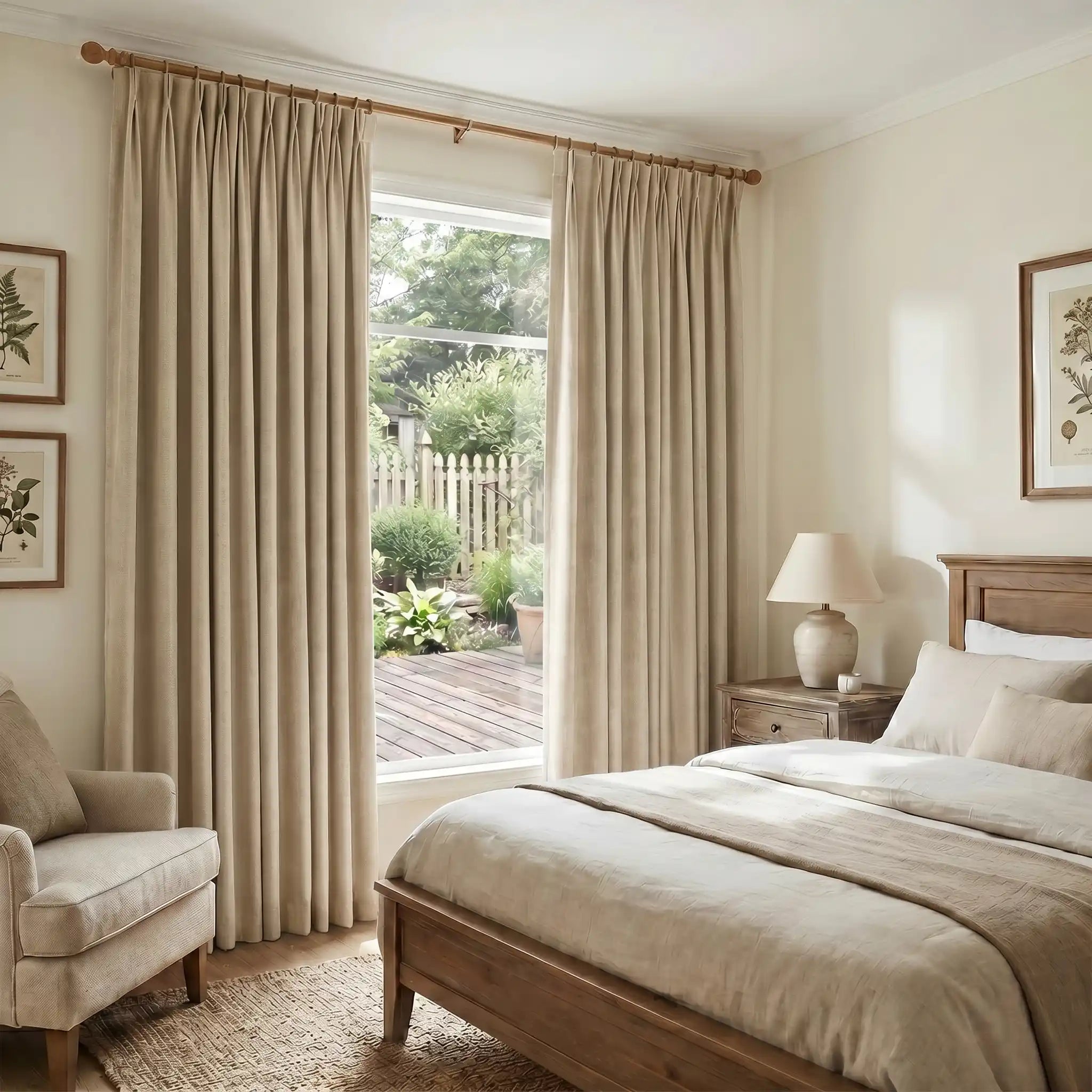

Roman shades and curtains are both beautiful — but they create very different looks, serve different functions, and suit different spaces. If you’ve been going back and forth on roman shades or curtains for your home, you’re not alone. It’s one of the most common window treatment dilemmas, and the right answer genuinely depends on your room, your lifestyle, and your aesthetic priorities. Let’s work through it together.

What Are Roman Shades?
Roman shades are fabric window coverings that raise and lower in neat horizontal folds. When raised, they stack into a compact, structured bundle at the top of the window. When lowered, they lie flat against the glass in a clean, uninterrupted panel. The best roman shades are typically made from linen, cotton, or linen-blend fabrics in neutral tones, though they come in a wide range of materials and patterns.
The best roman shades for living room spaces tend to be flat-fold or relaxed-fold styles in natural fabrics — they have an architectural quality that feels intentional and refined without being fussy.
What Are Curtains?
Curtains (or drapes) are fabric panels that hang from a rod and draw open or closed horizontally. They add softness, movement, and visual height to a room in a way that shades simply can’t replicate. The best curtain panels are typically floor-length, hung high, and wide enough to stack well clear of the window when open.
Curtains come in an enormous range of styles — from casual linen sheers to formal velvet drapes, from grommet-top panels to pinch pleat or ripple fold designs. They’re the more versatile option in terms of style range.

Roman Shades vs Curtains: The Key Differences
Style & Visual Impact
Roman shades have a clean, architectural quality. They sit within or just outside the window frame and don’t add much visual bulk to the room. This makes them ideal for smaller spaces or rooms where you want the window treatment to recede rather than dominate.
Curtains make a statement. Floor-length panels add drama, height, and softness that roman shades can’t match. If you want your windows to be a design focal point, curtains are the stronger choice. How to style curtains for living room spaces: hang them high, make them wide, and let them just graze the floor for maximum impact.
Light Control
Both options can be made in light-filtering or blackout versions. How to choose roman shades for light control: look for blackout-lined options for bedrooms, or unlined linen for a soft, diffused glow in living areas. For curtains, the same principle applies — how to choose blackout curtains vs light-filtering depends on how much darkness you need.
One practical advantage of roman shades: when raised, they completely clear the window, letting in maximum light with zero obstruction. Curtains, even when open, always have some fabric at the sides of the window.
Privacy
Both provide good privacy when closed. Roman shades have a slight edge in smaller windows because they cover the glass more precisely. For best curtains for privacy in larger windows, floor-length blackout curtains are hard to beat.
Space & Scale
Roman shades work best on smaller to medium windows. For best curtains for large windows, curtains are almost always the better choice — roman shades on very wide windows can look awkward and are harder to operate. Similarly, for best curtains for tall windows, floor-length drapes hung from ceiling height create a stunning effect that roman shades can’t replicate.
Ease of Use & Maintenance
Roman shades are generally easier to operate (especially cordless versions) and easier to keep clean — a quick vacuum or wipe-down is usually sufficient. Curtains require more care: regular dusting, occasional washing or dry cleaning, and re-hanging. However, many modern curtain fabrics are machine washable, which makes maintenance much more manageable.

How to Choose: Roman Shades or Curtains?
Here’s a simple decision framework for how to choose window treatments between these two options:
- Choose roman shades if: You want a clean, architectural look; your windows are small to medium; you prefer a minimalist aesthetic; or you want the window to recede rather than dominate.
- Choose curtains if: You want to add drama and height; your windows are large or floor-to-ceiling; you want softness and movement; or you need maximum light blocking with a blackout lining.
- Choose both if: You want the best of both worlds — roman shades for precise light control, curtains layered over for style and warmth. This combination is especially popular in living rooms and master bedrooms.
Are Roman Shades Worth It?
Are roman shades worth it? For the right window and the right room, absolutely. Custom linen roman shades in particular have a quality and refinement that’s hard to achieve with off-the-shelf options. They’re especially worth the investment in kitchens, dining rooms, and smaller bedrooms where curtains might feel overwhelming.
FAQ: Roman Shades vs Curtains
What are the best roman shades for a living room?
The best roman shades for living room spaces are typically flat-fold or relaxed-fold styles in natural linen or linen-blend fabrics. Custom sizing ensures a perfect fit, and a light-filtering lining gives you privacy without blocking all natural light.
Can roman shades replace curtains entirely?
In some rooms, yes. Roman shades work well as a standalone window treatment in kitchens, dining rooms, and smaller bedrooms. In living rooms and master bedrooms, many homeowners prefer to layer roman shades with curtains for both function and style.
How to measure roman shades vs curtains?
How to measure roman shades: measure the exact width and height of your window opening for an inside mount, or the width and height of the area you want to cover for an outside mount. How to measure curtains: measure the rod width (typically 1.5–2x the window width) and the desired length from rod to floor.
Are cordless zebra shades a good alternative to roman shades?
Yes — cordless zebra shades vs roman shades: zebra shades offer more flexible light control (you can adjust from sheer to near-blackout) while roman shades offer a more classic, fabric-forward look. Both are excellent choices depending on your style preference.
How to hang roman shades vs curtains?
How to hang roman shades: mount the headrail inside the window frame for a clean look, or outside the frame for a larger appearance. How to hang curtains: mount the rod 4–6 inches above the window frame (or closer to the ceiling for maximum height effect), and ensure the rod extends 6–12 inches beyond the window on each side so curtains stack clear of the glass when open.