Buying Guides

Best Curtains for French Doors: What Works Best?
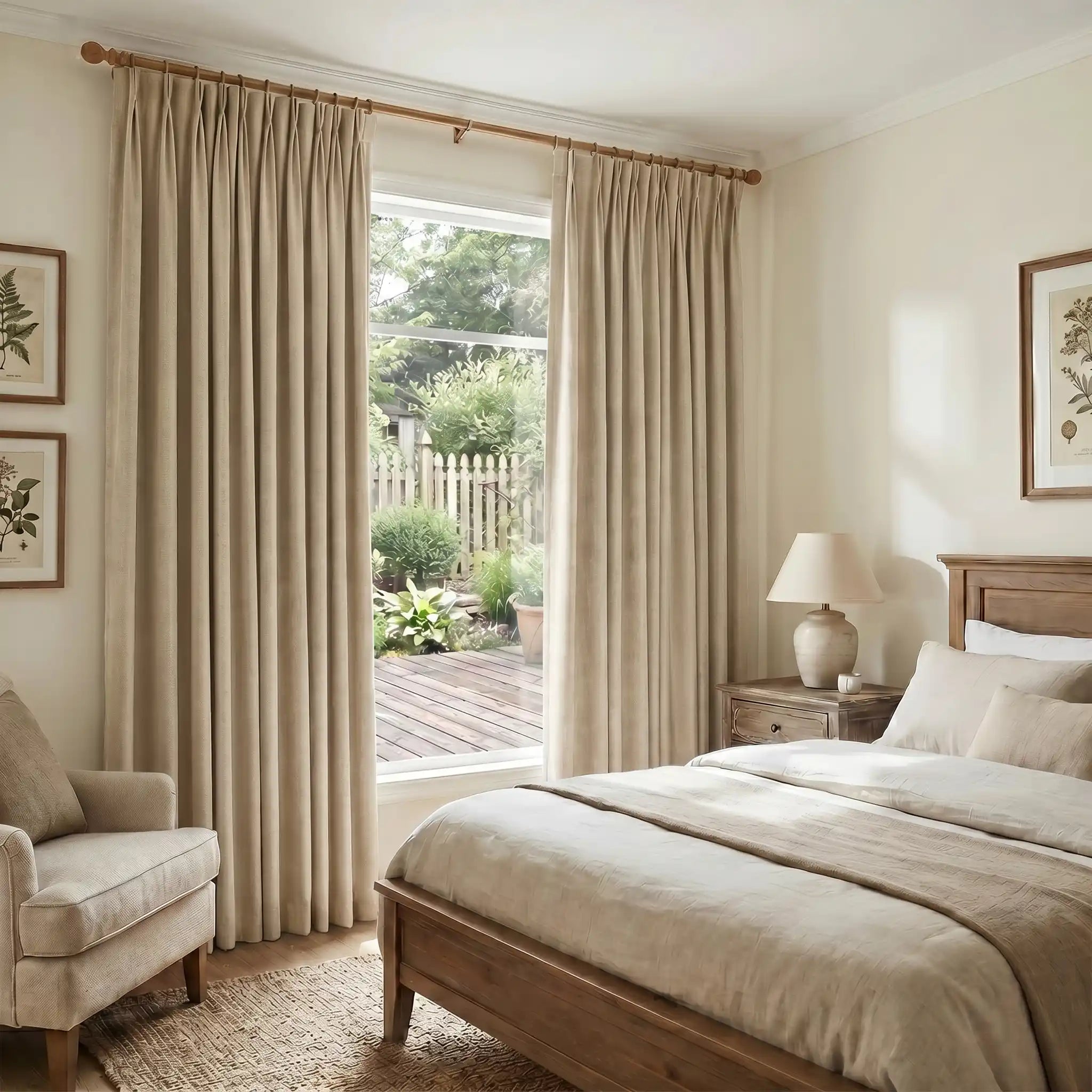
French doors are one of those features that look effortlessly elegant until you try to dress them. The handles get in the way. The doors swing inward or outward. The glass panels go almost to the floor. And a treatment that works beautifully on a regular window suddenly feels awkward or impractical once it's hanging on a door that actually moves. That's why finding the best curtains for French doors takes a bit more thought than a standard window treatment. The good news is that once you understand the constraints, the options narrow quickly — and the right choice usually becomes obvious. Working around handles and door swing This is the first thing to solve, because it affects everything else. If the door swings into the room, a floor-length panel mounted on a wall rod will bunch up every time the door opens. If the handle sits in the middle of the door, a panel that's attached to the door itself needs to be cut or gathered to clear it cleanly. The most practical solution for most French doors is a panel mounted directly on the door — either on a tension rod inside the frame or on a small rod attached to the door itself. Our French Door Curtain Panel is designed for exactly this setup, with the right proportions to sit neatly on the door without dragging or bunching when it opens and closes. Privacy without closing the room down French doors are usually chosen because they let light through and connect spaces visually. A heavy blackout treatment solves the privacy problem but defeats the purpose of having French doors in the first place. The better approach is a fabric that filters light rather than blocking it entirely. Semi-sheer and light-filtering fabrics work well here — they soften the view from outside without making the interior feel dark or closed off. Our Luxury Silk-Fiber French Door Blackout Curtains offer a more complete solution for rooms that need full privacy at night, with a fabric weight that still looks refined rather than utilitarian. For daytime use, pairing them with a sheer layer gives you the flexibility to adjust throughout the day. Styles that sit neatly on the door Because French door curtains move with the door, they need to stay in place without shifting, twisting, or pulling away from the glass. Panels that are too wide will bunch awkwardly; panels that are too narrow won't cover the glass properly when closed. A good fit means the panel covers the glass with a small amount of overlap on each side — enough to block the view without excess fabric that catches on things. Our French Blackout Door Curtain with Tieback includes a tieback so you can hold the panel neatly to the side when you want the door fully open, which makes a real difference in how tidy the whole setup looks day to day. A practical takeaway Measure the glass panel on the door itself, not the full door frame. That's the area you need to cover, and it's usually smaller than people expect. Also think about whether you want the curtain to move with the door or stay fixed on a wall-mounted rod — both approaches work, but they suit different situations and door configurations. Final thoughts The best curtains for French doors are the ones that respect how the door actually works — moving with it, clearing the hardware, and covering the glass without fighting the architecture. Get those basics right, and the result will look considered and calm rather than like an afterthought.
Learn more
Best Curtains for Apartments: Stylish Options for Renters
Apartment windows are a particular kind of challenge. You can't drill into the walls without risking your deposit, the windows are often oddly sized, and whatever you hang needs to look intentional rather than temporary. That's the real puzzle behind finding the best curtains for apartments — making a rental feel like a home without leaving a mark on it. The good news is that the constraints actually make the decision easier. Once you know what you can and can't do, the options narrow quickly and the right choice becomes much clearer. Renter-friendly upgrades The first thing to figure out is how you're going to hang the curtains. Tension rods are the obvious answer for renters — no drilling, no damage, easy to remove when you move out. They work well for lighter fabrics like sheers and linens, which is actually a good thing, because those tend to look more considered in apartment settings anyway. Our Custom Linen Sheer Solid Curtains are a natural fit here. The fabric is light enough to hang on a tension rod without sagging, and the clean solid color works in almost any apartment layout without competing with whatever else is going on in the room. Budget without a disposable look Renters often default to cheap curtains because they don't want to invest in something they'll leave behind. But a curtain that looks cheap makes the whole room feel temporary — which is exactly the feeling you're trying to avoid. The better approach is to choose something that looks considered and can move with you. Our Custom Textured Linen Curtains have the kind of quiet texture that reads as intentional rather than budget-driven. They're the sort of thing that looks good in a studio apartment now and just as good in a proper house later — which makes the investment feel a lot more reasonable. Easy installation and flexibility Beyond the rod situation, think about how the curtains will work day to day. In an apartment, you're often dealing with windows that face other buildings or busy streets, so you need something that gives you privacy when you want it but doesn't make the room feel like a cave when you don't. Layered treatments solve this well. Our 4-Piece Curtain Set with Blackout and Sheer Panels gives you both in one package — sheers for daytime softness, blackout panels for nighttime privacy, and tiebacks to hold everything neatly when you want the window fully open. It's the kind of flexibility that makes a real difference in a space where the window does a lot of work. A practical takeaway Before you buy, measure from the floor up and decide whether you want the panels to just clear the floor or pool slightly. Floor-length curtains make ceilings feel higher, which is almost always a good thing in an apartment. And hang the rod as high as you can — even a tension rod can go close to the ceiling if the window frame allows it. Final thoughts The best curtains for apartments aren't the ones that look the most impressive in a product photo. They're the ones that make your specific space feel finished, calm, and like you actually chose them — not just grabbed whatever was available. Get that right, and the room will feel like home regardless of whose name is on the lease.
Learn more
How to Choose the Best Curtain Length for Any Room
Curtain length is one of those decisions that looks minor until you get it wrong. A panel that's two inches too short makes the whole room feel slightly off — not dramatically wrong, just never quite settled. And because curtains frame the window from floor to ceiling, that small miscalculation is visible from everywhere in the room. That's why getting the best curtain length right is worth more attention than most people give it. The good news is that there are really only a few options, and each one communicates something specific. Once you understand what each length does to a room, the choice usually becomes obvious. What different lengths communicate visually Length isn't just a practical measurement — it's a design signal. Floor-length curtains say formal, considered, and finished. Sill-length curtains say practical and unfussy. Anything in between — hovering awkwardly between the sill and the floor — tends to look like a mistake rather than a choice. The most reliable rule is to commit to one end or the other. Either go to the floor or stop at the sill. The middle ground rarely works, and it's almost always the result of buying a standard length without measuring first. Where floor length makes sense Floor-length curtains work in almost every room — bedroom, living room, dining room — and they almost always make the space feel more considered. The reason is simple: a panel that runs from near the ceiling to the floor draws the eye upward and downward simultaneously, which makes the ceiling feel higher and the room feel more complete. For bedrooms especially, floor-length blackout panels are hard to beat. Our Custom Luxury Silk-Fiber Blackout Curtains are designed to hang cleanly to the floor with just a slight break — enough to look intentional without pooling excessively. If you want a more dramatic look, letting the fabric pool an inch or two adds a sense of luxury that works well in formal spaces. When shorter lengths are genuinely useful Sill-length curtains get a bad reputation, but they're genuinely the right choice in certain situations. Kitchens and bathrooms benefit from shorter panels because floor-length fabric near a sink or stove is impractical. Rooms with radiators under the windows need panels that stop above the heat source. And spaces with furniture placed directly under the window — a sofa, a window seat, a desk — often look better with a treatment that doesn't compete with what's below it. Our Custom Linen Texture Solid Sheer Curtains work well at sill length in these situations — the texture keeps them from looking too plain, and the sheer fabric means they don't make the space feel closed in even when the window is small. A practical takeaway Always measure from where the rod will hang, not from the top of the window frame. Most people hang their rod too low — ideally it should sit four to six inches above the frame, or closer to the ceiling if the wall space allows. That extra height is what makes floor-length curtains look intentional rather than just long. And when in doubt, go slightly longer rather than shorter — a small break at the floor reads as deliberate, while a panel that just misses the floor reads as a mistake. Final thoughts The best curtain length isn't a universal answer — it depends on the room, the window, and what's around it. But the decision is simpler than it seems once you stop thinking about it as a measurement and start thinking about it as a design choice. Commit to a length, hang the rod high, and the rest tends to fall into place.
Learn more
Best Curtains for Sliding Glass Doors: Top Styles for Modern Homes
A sliding glass door is one of those features that sounds great on paper — indoor-outdoor flow, natural light, a view — until you realize it also means a very wide, very exposed opening that needs to work morning, noon, and night. That's why choosing the best curtains for sliding glass doors is worth more thought than a standard window treatment. The practical side matters here more than almost anywhere else in the home. The curtains need to move smoothly every time the door opens, cover a wide span without sagging, and still look intentional rather than improvised. Get those things right, and the style part becomes much easier. Smooth everyday movement This is the detail that separates a treatment that works from one that just looks good in photos. A sliding glass door gets used constantly — morning coffee, letting the dog out, bringing in groceries — so the curtains need to move without friction, bunch, or catching on the track. Panel systems that stack cleanly to one side are usually the most practical. Our Wide Width Blackout Curtain Panel is designed exactly for this — one wide panel that draws across the full opening and stacks neatly when open, without the gaps or misalignment you get from piecing together multiple narrow panels. Privacy across a wide opening A sliding glass door that faces a neighbor's yard or a busy street needs real privacy coverage, especially at night when interior lighting makes everything visible from outside. This is where fabric weight and opacity matter. For full coverage, a blackout or room-darkening fabric is the most reliable choice. Our Luxury Silk-Fiber Ombre Blackout Curtains give you complete privacy while still looking refined — the ombre gradient adds visual interest without making the treatment feel heavy or institutional. If you want privacy during the day but still want some light, layering a sheer underneath gives you flexibility without compromising the look. A clean look for modern rooms Sliding glass doors tend to appear in open-plan spaces — living rooms, dining areas, kitchen extensions — where the curtain treatment is visible from multiple angles and needs to hold up to scrutiny. Fussy or overly decorative styles tend to look out of place here. Clean-lined panels in neutral tones almost always work best. Our Silk Fibers Blackout Room Divider Curtains have the kind of quiet elegance that reads well in modern interiors — substantial enough to anchor the space, but understated enough not to compete with the view or the furniture around them. A practical takeaway Before you buy, measure the full width of the door opening and add at least 12 inches on each side for stacking space. Think about which direction the door slides and make sure the curtain rod or track extends far enough that the panels clear the glass completely when open. A treatment that blocks the door even slightly will get pushed aside and never used properly. Final thoughts The best curtains for sliding glass doors aren't necessarily the most dramatic ones — they're the ones that move easily, cover well, and look like they belong. When function and scale are right, the style follows naturally.
Learn more
Best Curtains for Large Windows: What to Buy and Why
A curtain decision often looks simple until the room starts pushing back. The light is stronger than expected, the window is wider than it looked online, or the fabric that felt pretty in a swatch suddenly feels wrong at full scale. That is why best curtains for large windows deserves a more thoughtful read than a quick yes-or-no purchase. A good rule is to let function narrow the field before aesthetics take over. Once you know how much scale and proportion matters, which of custom curtains for large windows or drapery panels is easier to live with, and how polished you want the result to feel, the right direction gets much easier to see. Scale and proportion A lot hinges on scale and proportion. It is one of those design choices that seems subtle until you compare two rooms side by side. One feels balanced and useful; the other feels almost right but never completely settled. This is also where material and construction matter. Custom curtains for large windows tends to work best when the goal is a softer, more natural finish, while drapery panels earns its place when coverage, structure, or ease of use matter more than visual lightness alone. Custom sizing and fullness Start here: custom sizing and fullness. This is the point that usually determines whether the final result feels obvious in a good way or slightly compromised. In a bright room with large windows, for example, the best-looking treatment often ends up being the one that manages daylight calmly instead of fighting it. Think about how the room is used from morning to night. Drapery panels often shine when you want the treatment to recede into the background. Window treatments usually make more sense when you need the window treatment to do more visible work. Fabric weight and hardware support The real question behind this topic is fabric weight and hardware support. Once that is clear, many of the usual shopping distractions fall away. Features that sound equally appealing on a product page suddenly show their strengths and weaknesses much more honestly. Think about how the room is used from morning to night. Window treatments often shine when you want the treatment to recede into the background. Custom curtains for large windows usually make more sense when you need the window treatment to do more visible work. For a layered look, consider our Linen Texture Ombre Sheer Curtains as an elegant complement. A practical takeaway It also helps to picture the room on an ordinary weekday instead of in a styled photo. Will the window be opened often? Is there furniture nearby? Does the space need blackout at night but softness during the day? Those questions usually lead to better decisions than trend lists do. Our Velvet Blackout Curtains with Tiebacks are a popular choice for large windows that need both drama and function. Final thoughts In the end, best curtains for large windows is less about finding a universally perfect answer and more about choosing the option that makes the room feel easier to live in. When light, scale, and function all line up, the style almost takes care of itself.
Learn more
Linen Curtains vs Blackout Curtains: Which One Should You Choose?
A curtain decision often looks simple until the room starts pushing back. The light is stronger than expected, the window is wider than it looked online, or the fabric that felt pretty in a swatch suddenly feels wrong at full scale. That is why linen curtains vs blackout curtains deserves a more thoughtful read than a quick yes-or-no purchase.Instead of asking what is most popular, ask what will still feel right six months after installation. A room that works beautifully day and night will always age better than one that was styled for the first impression alone.The mood each option createsA lot hinges on the mood each option creates. It is one of those design choices that seems subtle until you compare two rooms side by side. One feels balanced and useful; the other feels almost right but never completely settled.Think about how the room is used from morning to night. linen curtains often shines when you want the treatment to recede into the background. blackout curtains usually makes more sense when you need the window treatment to do more visible work.When linen is the better fitStart here: when linen is the better fit. This is the point that usually determines whether the final result feels obvious in a good way or slightly compromised. In a bright room, for example, the best-looking treatment often ends up being the one that manages daylight calmly instead of fighting it.Think about how the room is used from morning to night. blackout curtains often shines when you want the treatment to recede into the background. room darkening curtains usually makes more sense when you need the window treatment to do more visible work.When blackout solves the real problemThe real question behind this topic is when blackout solves the real problem. Once that is clear, many of the usual shopping distractions fall away. Features that sound equally appealing on a product page suddenly show their strengths and weaknesses much more honestly.This is also where material and construction matter. room darkening curtains tends to work best when the goal is a softer, more natural finish, while linen curtains earns its place when coverage, structure, or ease of use matter more than visual lightness alone.A practical takeawayIt also helps to picture the room on an ordinary weekday instead of in a styled photo. Will the window be opened often? Is there furniture nearby? Does the space need blackout at night but softness during the day? Those questions usually lead to better decisions than trend lists do. Our Layered Blackout and Sheer Curtains offer the best of both worlds for exactly this situation.Final thoughtsIf you want a window treatment that still feels right after the novelty wears off, choose the one that respects the room's real needs first. That is the most reliable path to getting linen curtains vs blackout curtains right.
Learn more
Best Bedroom Curtains for Privacy, Light Control, and Style
A curtain decision often looks simple until the room starts pushing back. The light is stronger than expected, the window is wider than it looked online, or the fabric that felt pretty in a swatch suddenly feels wrong at full scale. That is why best bedroom curtains deserves a more thoughtful read than a quick yes-or-no purchase.A good rule is to let function narrow the field before aesthetics take over. Once you know how much sleep quality and privacy matters, which of blackout curtains for bedroom or privacy curtains is easier to live with, and how polished you want the result to feel, the right direction gets much easier to see.Sleep quality and privacyA lot hinges on sleep quality and privacy. It is one of those design choices that seems subtle until you compare two rooms side by side. One feels balanced and useful; the other feels almost right but never completely settled.That is where blackout curtains for bedroom can be a smart move. It helps when you want the room to feel quiet, restful, and protected rather than overworked. By contrast, privacy curtains is often better when the room needs more control, more definition, or a little extra confidence around the window.Blackout versus light-filtering fabricsStart here: blackout versus light-filtering fabrics. This is the point that usually determines whether the final result feels obvious in a good way or slightly compromised. In a bright bedroom, for example, the best-looking treatment often ends up being the one that manages daylight calmly instead of fighting it.Think about how the room is used from morning to night. privacy curtains often shines when you want the treatment to recede into the background. window treatments usually makes more sense when you need the window treatment to do more visible work.Soft textures and calming colorsA lot hinges on soft textures and calming colors. It is one of those design choices that seems subtle until you compare two rooms side by side. One feels balanced and useful; the other feels almost right but never completely settled.That is where window treatments can be a smart move. It helps when you want the room to feel quiet, restful, and protected rather than overworked. By contrast, blackout curtains for bedroom is often better when the room needs more control, more definition, or a little extra confidence around the window.A practical takeawayOne of the easiest ways to improve the result is to think about the view from across the room, not just from directly in front of the window. Length, stacking space, and the way the treatment sits when open all affect whether it feels custom or improvised. Explore our French Door Blackout Curtains and Semi-Sheer Lace Voile Curtains for more options.Final thoughtsIn the end, best bedroom curtains is less about finding a universally perfect answer and more about choosing the option that makes the room feel easier to live in. When light, scale, and function all line up, the style almost takes care of itself.
Learn more