Buying Guides

Best Curtains for Sliding Glass Doors: Top Styles for Modern Homes
A sliding glass door is one of those features that sounds great on paper — indoor-outdoor flow, natural light, a view — until you realize it also means a very wide, very exposed opening that needs to work morning, noon, and night. That's why choosing the best curtains for sliding glass doors is worth more thought than a standard window treatment. The practical side matters here more than almost anywhere else in the home. The curtains need to move smoothly every time the door opens, cover a wide span without sagging, and still look intentional rather than improvised. Get those things right, and the style part becomes much easier. Smooth everyday movement This is the detail that separates a treatment that works from one that just looks good in photos. A sliding glass door gets used constantly — morning coffee, letting the dog out, bringing in groceries — so the curtains need to move without friction, bunch, or catching on the track. Panel systems that stack cleanly to one side are usually the most practical. Our Wide Width Blackout Curtain Panel is designed exactly for this — one wide panel that draws across the full opening and stacks neatly when open, without the gaps or misalignment you get from piecing together multiple narrow panels. Privacy across a wide opening A sliding glass door that faces a neighbor's yard or a busy street needs real privacy coverage, especially at night when interior lighting makes everything visible from outside. This is where fabric weight and opacity matter. For full coverage, a blackout or room-darkening fabric is the most reliable choice. Our Luxury Silk-Fiber Ombre Blackout Curtains give you complete privacy while still looking refined — the ombre gradient adds visual interest without making the treatment feel heavy or institutional. If you want privacy during the day but still want some light, layering a sheer underneath gives you flexibility without compromising the look. A clean look for modern rooms Sliding glass doors tend to appear in open-plan spaces — living rooms, dining areas, kitchen extensions — where the curtain treatment is visible from multiple angles and needs to hold up to scrutiny. Fussy or overly decorative styles tend to look out of place here. Clean-lined panels in neutral tones almost always work best. Our Silk Fibers Blackout Room Divider Curtains have the kind of quiet elegance that reads well in modern interiors — substantial enough to anchor the space, but understated enough not to compete with the view or the furniture around them. A practical takeaway Before you buy, measure the full width of the door opening and add at least 12 inches on each side for stacking space. Think about which direction the door slides and make sure the curtain rod or track extends far enough that the panels clear the glass completely when open. A treatment that blocks the door even slightly will get pushed aside and never used properly. Final thoughts The best curtains for sliding glass doors aren't necessarily the most dramatic ones — they're the ones that move easily, cover well, and look like they belong. When function and scale are right, the style follows naturally.
Learn more
Best Curtains for Large Windows: What to Buy and Why
A curtain decision often looks simple until the room starts pushing back. The light is stronger than expected, the window is wider than it looked online, or the fabric that felt pretty in a swatch suddenly feels wrong at full scale. That is why best curtains for large windows deserves a more thoughtful read than a quick yes-or-no purchase. A good rule is to let function narrow the field before aesthetics take over. Once you know how much scale and proportion matters, which of custom curtains for large windows or drapery panels is easier to live with, and how polished you want the result to feel, the right direction gets much easier to see. Scale and proportion A lot hinges on scale and proportion. It is one of those design choices that seems subtle until you compare two rooms side by side. One feels balanced and useful; the other feels almost right but never completely settled. This is also where material and construction matter. Custom curtains for large windows tends to work best when the goal is a softer, more natural finish, while drapery panels earns its place when coverage, structure, or ease of use matter more than visual lightness alone. Custom sizing and fullness Start here: custom sizing and fullness. This is the point that usually determines whether the final result feels obvious in a good way or slightly compromised. In a bright room with large windows, for example, the best-looking treatment often ends up being the one that manages daylight calmly instead of fighting it. Think about how the room is used from morning to night. Drapery panels often shine when you want the treatment to recede into the background. Window treatments usually make more sense when you need the window treatment to do more visible work. Fabric weight and hardware support The real question behind this topic is fabric weight and hardware support. Once that is clear, many of the usual shopping distractions fall away. Features that sound equally appealing on a product page suddenly show their strengths and weaknesses much more honestly. Think about how the room is used from morning to night. Window treatments often shine when you want the treatment to recede into the background. Custom curtains for large windows usually make more sense when you need the window treatment to do more visible work. For a layered look, consider our Linen Texture Ombre Sheer Curtains as an elegant complement. A practical takeaway It also helps to picture the room on an ordinary weekday instead of in a styled photo. Will the window be opened often? Is there furniture nearby? Does the space need blackout at night but softness during the day? Those questions usually lead to better decisions than trend lists do. Our Velvet Blackout Curtains with Tiebacks are a popular choice for large windows that need both drama and function. Final thoughts In the end, best curtains for large windows is less about finding a universally perfect answer and more about choosing the option that makes the room feel easier to live in. When light, scale, and function all line up, the style almost takes care of itself.
Learn more
Linen Curtains vs Blackout Curtains: Which One Should You Choose?
A curtain decision often looks simple until the room starts pushing back. The light is stronger than expected, the window is wider than it looked online, or the fabric that felt pretty in a swatch suddenly feels wrong at full scale. That is why linen curtains vs blackout curtains deserves a more thoughtful read than a quick yes-or-no purchase.Instead of asking what is most popular, ask what will still feel right six months after installation. A room that works beautifully day and night will always age better than one that was styled for the first impression alone.The mood each option createsA lot hinges on the mood each option creates. It is one of those design choices that seems subtle until you compare two rooms side by side. One feels balanced and useful; the other feels almost right but never completely settled.Think about how the room is used from morning to night. linen curtains often shines when you want the treatment to recede into the background. blackout curtains usually makes more sense when you need the window treatment to do more visible work.When linen is the better fitStart here: when linen is the better fit. This is the point that usually determines whether the final result feels obvious in a good way or slightly compromised. In a bright room, for example, the best-looking treatment often ends up being the one that manages daylight calmly instead of fighting it.Think about how the room is used from morning to night. blackout curtains often shines when you want the treatment to recede into the background. room darkening curtains usually makes more sense when you need the window treatment to do more visible work.When blackout solves the real problemThe real question behind this topic is when blackout solves the real problem. Once that is clear, many of the usual shopping distractions fall away. Features that sound equally appealing on a product page suddenly show their strengths and weaknesses much more honestly.This is also where material and construction matter. room darkening curtains tends to work best when the goal is a softer, more natural finish, while linen curtains earns its place when coverage, structure, or ease of use matter more than visual lightness alone.A practical takeawayIt also helps to picture the room on an ordinary weekday instead of in a styled photo. Will the window be opened often? Is there furniture nearby? Does the space need blackout at night but softness during the day? Those questions usually lead to better decisions than trend lists do. Our Layered Blackout and Sheer Curtains offer the best of both worlds for exactly this situation.Final thoughtsIf you want a window treatment that still feels right after the novelty wears off, choose the one that respects the room's real needs first. That is the most reliable path to getting linen curtains vs blackout curtains right.
Learn more
Best Bedroom Curtains for Privacy, Light Control, and Style
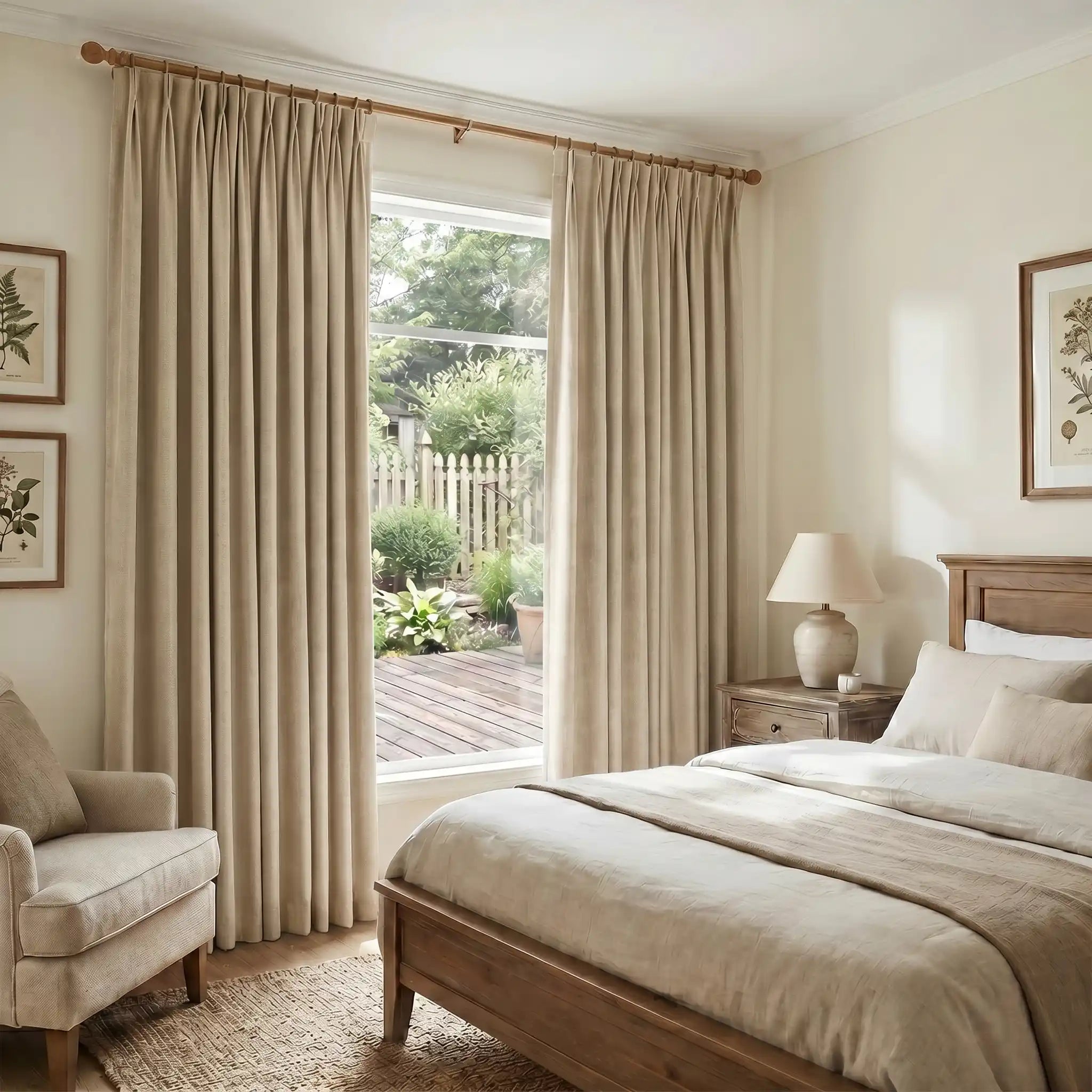
A curtain decision often looks simple until the room starts pushing back. The light is stronger than expected, the window is wider than it looked online, or the fabric that felt pretty in a swatch suddenly feels wrong at full scale. That is why best bedroom curtains deserves a more thoughtful read than a quick yes-or-no purchase.A good rule is to let function narrow the field before aesthetics take over. Once you know how much sleep quality and privacy matters, which of blackout curtains for bedroom or privacy curtains is easier to live with, and how polished you want the result to feel, the right direction gets much easier to see.Sleep quality and privacyA lot hinges on sleep quality and privacy. It is one of those design choices that seems subtle until you compare two rooms side by side. One feels balanced and useful; the other feels almost right but never completely settled.That is where blackout curtains for bedroom can be a smart move. It helps when you want the room to feel quiet, restful, and protected rather than overworked. By contrast, privacy curtains is often better when the room needs more control, more definition, or a little extra confidence around the window.Blackout versus light-filtering fabricsStart here: blackout versus light-filtering fabrics. This is the point that usually determines whether the final result feels obvious in a good way or slightly compromised. In a bright bedroom, for example, the best-looking treatment often ends up being the one that manages daylight calmly instead of fighting it.Think about how the room is used from morning to night. privacy curtains often shines when you want the treatment to recede into the background. window treatments usually makes more sense when you need the window treatment to do more visible work.Soft textures and calming colorsA lot hinges on soft textures and calming colors. It is one of those design choices that seems subtle until you compare two rooms side by side. One feels balanced and useful; the other feels almost right but never completely settled.That is where window treatments can be a smart move. It helps when you want the room to feel quiet, restful, and protected rather than overworked. By contrast, blackout curtains for bedroom is often better when the room needs more control, more definition, or a little extra confidence around the window.A practical takeawayOne of the easiest ways to improve the result is to think about the view from across the room, not just from directly in front of the window. Length, stacking space, and the way the treatment sits when open all affect whether it feels custom or improvised. Explore our French Door Blackout Curtains and Semi-Sheer Lace Voile Curtains for more options.Final thoughtsIn the end, best bedroom curtains is less about finding a universally perfect answer and more about choosing the option that makes the room feel easier to live in. When light, scale, and function all line up, the style almost takes care of itself.
Learn more